
Building an Innovation Nation
What a future with AI can look like for the economy, education, our culture and narratives.


For some time I have been hoping that there is a version of the future with AI in which people aren’t simply replaced because of their lack of value in the labor market. This hope is based plainly on the real-world experiences that I and many others have had while trying to bring AI into our workflows, and into our creative work. We have found that, while the machine is incredibly adept at executing on things that are already well scoped, it still does not quite have the sense of taste and judgment that you need to understand what good looks like, what insight is, how good writing comes across, how to get things to feel right, or even what product to build.
What I want to do here is follow that hope all the way down: If the gap holds, what would it actually take to build a nation of innovators who can use AI, and what are we currently getting wrong that stops us?
None of what I’m about to say is based on deep expertise on any field, and yet I feel the need to say it out loud.
Now, granted, models are accelerating all the time, and maybe we will see behaviors like taste and judgment in these areas as well. There is a part of me that holds out hope here. For as long as we can’t fully understand what human consciousness even is, even as our science and tools for understanding the universe keep getting better, there’s a chance a gap remains between human consciousness and what AI models can do.
I label this a hope because if this gap exists and it exists in the field of judgment, wisdom, and the soft, fuzzy logic on which a lot of real product instincts are built, then it suggests to me that a future in which we accelerate the pace of innovation with AI will still depend on us and a bit of what it is that makes us human. I’m particularly optimistic that, as we begin to understand the conditions that enable these more ambiguous traits and talents to develop, we’ll be naturally pushed to question many of the assumptions we hold about ourselves, our economy, our businesses, and society as a whole.
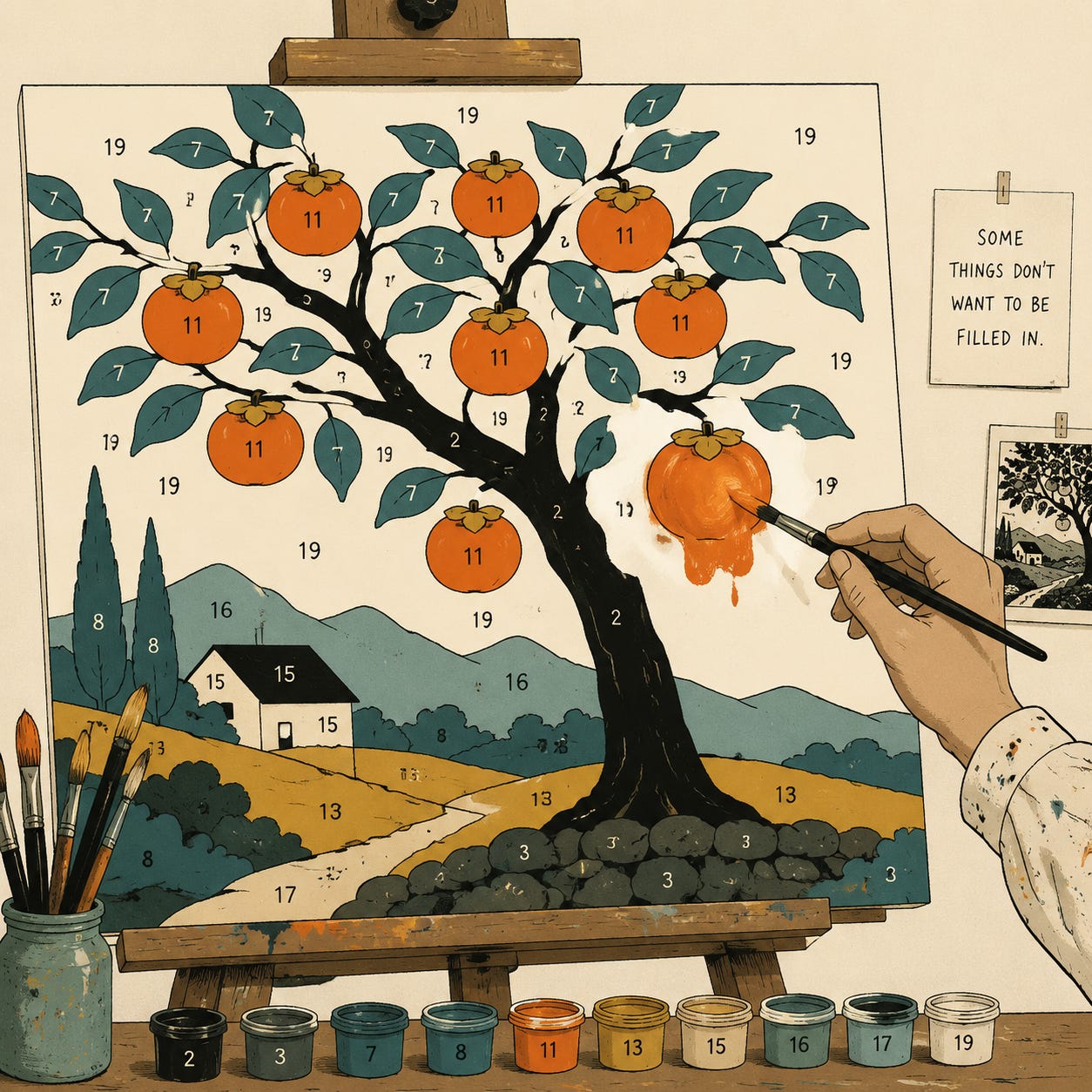
I mostly focus on product innovation, partly because that is my expertise as a product manager, and partly because I’ve spent hundreds of hours, if not more, listening to founders describe what it actually takes to build a successful tech company. Still, I believe the fundamental human lessons here, about which skills matter and which environments let people do their best work, apply broadly across many domains.
What I’m attempting to do in this essay is to talk about what it means to build a nation of innovators and builders who leverage AI in order to maximize the innovation and economic benefits that it promises to deliver to us. This will not happen if we simply develop frontier models. It happens once we actually create useful solutions, products, and better systems using AI’s capabilities.
For us to get there, I believe there’s a lot we get wrong in how we understand the economy, run businesses, educate, and distribute benefits, and it’s holding back our innovation potential.
First, a rapid lesson on how to innovate as a founder. This appears to be true and consistent across every story I have heard:
The need for a vision and a strong conviction in what you are building.
You have a particular insight into how things could be better.
You are passionate about this problem space, so much so that you do not mind years of working under a ramen diet in obscurity to make this thing happen.
This requires:
A lot of resilience.
The ability to know yourself.
An ability to question things like assumptions and things that everybody just takes for granted.
Realizing that there is an untapped opportunity or a better way to do things.
A curiosity and a creativity that drive you to continue asking those questions and to continue to come up with better solutions.
A willingness to move fast and to try things even before they’re perfect.
To talk to and to listen to customers and truly understand what they need, even if they themselves don’t exactly know how to put it in the right words.
To be willing to put out your terrible-looking product before it is ready so that you get learnings.
To continuously learn and iterate towards a better solution instead of trying to find the most perfect theory and sticking with it.
This goes counter to almost every single major experience we have growing up. In our education system, we reward students for being able to memorize a textbook and being able to regurgitate it on a test. Not knowing the right answer is punishable. We don’t teach our children how to navigate ambiguity or how to ask questions; we teach them to memorize answers.
After going through this brittle institution of knowledge retention, we go into a workplace in which a majority of public companies are driven by short-term quarterly pressures to deliver on shareholder value, and where the appearance of being right and decisive oftentimes eclipses the desire to find a better solution and navigate the nuanced and complicated realities of business and product innovation. Talking to customers gets treated like a checkbox instead of the art and practice that it really is. Products are shaped in theory and strategic frameworks rather than treated as hypotheses to be experimented on.
But it’s even worse. The incentive that drives upper-level management is to boost shareholder value and to be evaluated every quarter. A huge amount of their pay depends on it. However, these incentives have created conditions in which it’s nearly impossible to invest in long-term R&D strategies that take time to pay off, such as:
Funding the kind of foundational research that real breakthroughs are built on, the way the transistor, the internet, and even today’s AI all came out of long-horizon research that no quarterly earnings call would have tolerated.
Training our workforce to adapt to an ever-changing economic and technological environment.
Deep customer discovery and research, the kind that doesn’t pay off this quarter but tells you what’s actually worth building.
Building genuinely new products or categories from zero, instead of shipping incremental features that move a metric this quarter.
Maintaining and modernizing core infrastructure before it breaks, instead of deferring it because the capital expense dents the next earnings report.
All of this stems from the demands of short-term shareholder primacy. And although shareholder primacy has served for decades as an early framework for evaluating management, it’s never gotten the retrospective and update it badly needs. People like Warren Buffett and GE CEO Jack Welch have both called out the fallacy of using shareholder value as the primary goal of a business. Welch called it “the dumbest idea in the world,” while Buffett’s critique centers on the short-term, quarter-to-quarter pressure current governance rules create. In 2019, the Business Roundtable even called out the fallacies of the shareholder primacy model.
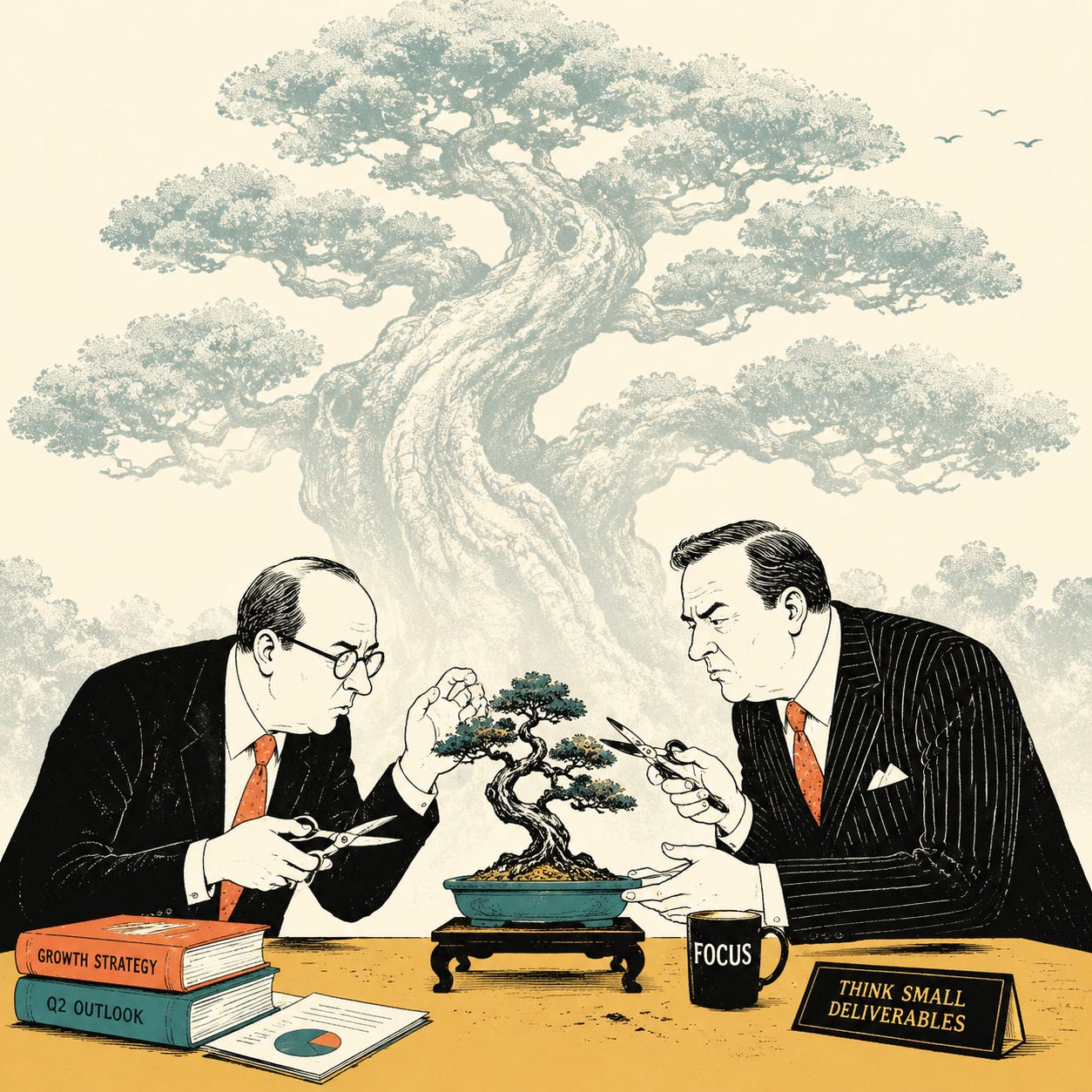
If we are to cultivate a society in which innovation is unlocked with AI, we need to also change the rules by which many companies are being governed, from top-level corporations all the way down to young startups, that are being held to the same standards regardless of their original mission or founder motivations, simply because of the cultural artifact of shareholder value. This causes perverse incentives in which the financiers are treated as more valuable and more important than the customers, employees, or even the founders themselves, a catastrophic situation that Eric Ries, creator of The Lean Startup, wrote about in his latest book, Incorruptible.
The fact that most of us have been raised in brittle knowledge acquisition institutions through formal education only makes the situation worse, because we have not developed our ability to question assumptions and ask questions about why everything is the way it is and whether it is working. We’ve mainly been taught how to absorb information and then repeat it. In the workplace, we’ve been taught to absorb rules and then apply them. The net effect is that we’ve made ourselves mechanical, exactly the kind of work now at risk of being automated by the very AI that promises to unlock innovation. And that innovation is blocked by our own limited imagination.
None of these practices happen by chance. We operate in this way because we believe that this is the best way to grow an economy and boost innovation, and it probably did work for a time, during the Industrial Revolution, when learning rules, applying them, and doing mechanical work were what drove the economy.
However, we’ve been running on assumptions that are now decades, maybe even a century, old. We’ve long needed to transition from the industrial age to the knowledge and information age. We’ve long needed to develop the human skills that allow us to innovate and create with computers like creativity, innovation, collaboration and empathy. We know many more things about the conditions that foster creativity: Like time, patience, and an open mind and humor. We proved the need to create psychologically safe spaces so that ideas can be encouraged. Yet we continue to operate on the same old mental models as we have been for decades without making an update based on new information.
But changing corporate governance laws and the curriculum by which we educate the population is not enough. We need to give people their time back. Because creativity and insights do not come from an environment in which someone is always tasked to be busy, anxious, and on edge. We need to give people the buffer to be able to create. The simple fact of the matter is, if people are struggling to survive, they do not have the time and energy to apply themselves to anything else.
And creating the conditions for people to have more time means freeing them from spending all of it on labor just to survive. This would require us to invest the wealth that we have generated as a society into creating those conditions for as many as possible. And that is where we have to turn to wealth inequality, because the buffer people need is exactly what the current distribution of wealth denies most of them. So before we can give people their time back, we have to understand how wealth came to be distributed the way it is.
For decades, we’ve been operating under a fundamental belief that wealth goes to those who create value. Net worth therefore equals the amount of value created, which is a net benefit for society in that it boosts economic growth, prosperity, and jobs for everyone and creates a competitive global edge. And so we’ve created a society in which the wealthy pay less taxes, access better opportunities to wealth creation and protection, and are given more privileges that they don’t even need.
However, this ignores real world conditions we’re operating under: In the US’s financialized economy, returns to capital compound far faster than wages. Wealth increasingly flows not to labor or value creation alone, but to asset ownership. That means wealth accumulation is driven less by work itself than by ownership, making extreme inequality a predictable outcome.
The imbalances are worsened by any amount of existing wealth accumulation. A billionaire who earns 10% on index funds can gain $100 million simply by holding assets, while a household with $100,000 in assets could double its net worth and still end up with only $200,000. That is why even small early advantages in asset ownership (through inheritance, windfalls, or luck) compound over time, generating ever more wealth with ever less effort, regardless of how much new economic value is created.

But we don’t need starting advantages, laws designed to favor the wealthy, or a financialized economy to create extreme inequality. There is an even deeper counterintuitive reality: Extreme inequality is the natural outcome of a perfectly fair economy. Let me explain that last one with a simple economic model.
Imagine a perfectly fair society: No rules rigging possible, no differences in starting advantages whatsoever. Nobody inherited disproportionate wealth, nobody had early advantages in their career or education that accrued more advantages through prestige bias and brand recognition, nobody could bend the rules even if they wanted to. The conditions of this society start out with perfectly equal individuals, all with the exact same characteristics and qualities as the other, with no racial or discriminatory biases of any kind being possible.
Each person has $100 to start with. The rules of this game are simple: Trade with one other person, the outcomes are based on a coin toss. Whoever loses gives up a fraction of their wealth. This fraction is universal, so for this instance let’s just say 25%. Essentially, nobody can bet their entire wealth, and everything is decided on a coin toss, and no, the coin is not rigged in any way.
What do you think happens to wealth distribution in this perfectly fair society with no manipulation, no differences whatsoever between any of the participants, where wealth transfer is entirely driven by a 50/50 chance?
I once asked this to my colleagues, and most people felt, “There must be a trick here, so the right answer can’t be a purely equal distribution of wealth. Plus random luck and chance would probably create some outliers, so I’ll go with this. Wealth is spread across a normal distribution, with some outliers in the lower and upper, but a majority of the wealth is still in the middle.”
Essentially a bell curve of some sort, is what most people feel intuitively is the correct answer. After all, outliers are just a part of messy reality.
What no one predicted, except for an old friend who studied game theory and economics, was extreme wealth inequality: A few oligarchs owned a vast majority of all the wealth, and they had so much wealth they mathematically could not lose it all. Meanwhile, the vast majority are essentially ruined. Their net worth is so low, that the odds of them escaping this poverty is like winning the Power Ball, three times in a row.
This yard sale simulation was created by professors who modeled 1000 computer agents and carried this simulation out many, many cycles to see what happened. I created a smaller simulation of 100 agents and visualized it, so you can see for yourself: https://show-and-tell-chi.vercel.app/yard-sale
The underlying logic of it is simple: Wealth begets more wealth, because the wealthy have more buffer to survive many losses, and more value to trade with and thus more value to gain per trade. The inverse is true. Once poor, there is NO buffer to lose, and while it is technically possible to make it out of poverty with successful trades, the chances of it are very, very low. Like winning the coin toss 100 times in a row kind of low, just to escape poverty, not to get wealthy, just to escape poverty. Which in the simulation, meant just having $1 out of the initial $100 you started out with.
It turns out that navigating poverty requires extreme skills, and the bitter truth of it is, that’s just to survive, not thrive. Meanwhile once wealthy, the wealthy have endless opportunities and quite an easy time staying wealthy and accruing more wealth, even without our real world laws and systems that benefit the wealthy outright.
The real tragedy here is the loss of potential wealth creators and innovators who could have come up from society, from anywhere. It turns out that talent is not something that only certain types of people have. It is a capability that can emerge from anyone. What tends to skew the outcomes, however, is individual opportunities and access to developing that talent, to be recognized for it, and to apply it.
Now, originally, that was perhaps the hope of our education institutions, but with huge differences in the levels of support and investment in education for every child and the ability to afford enriching activities, any advantages or disadvantages compound over time. AI can hopefully close some of that gap by bringing the world’s most knowledgeable and patient teaching assistant into everyone’s hands, but more is needed.
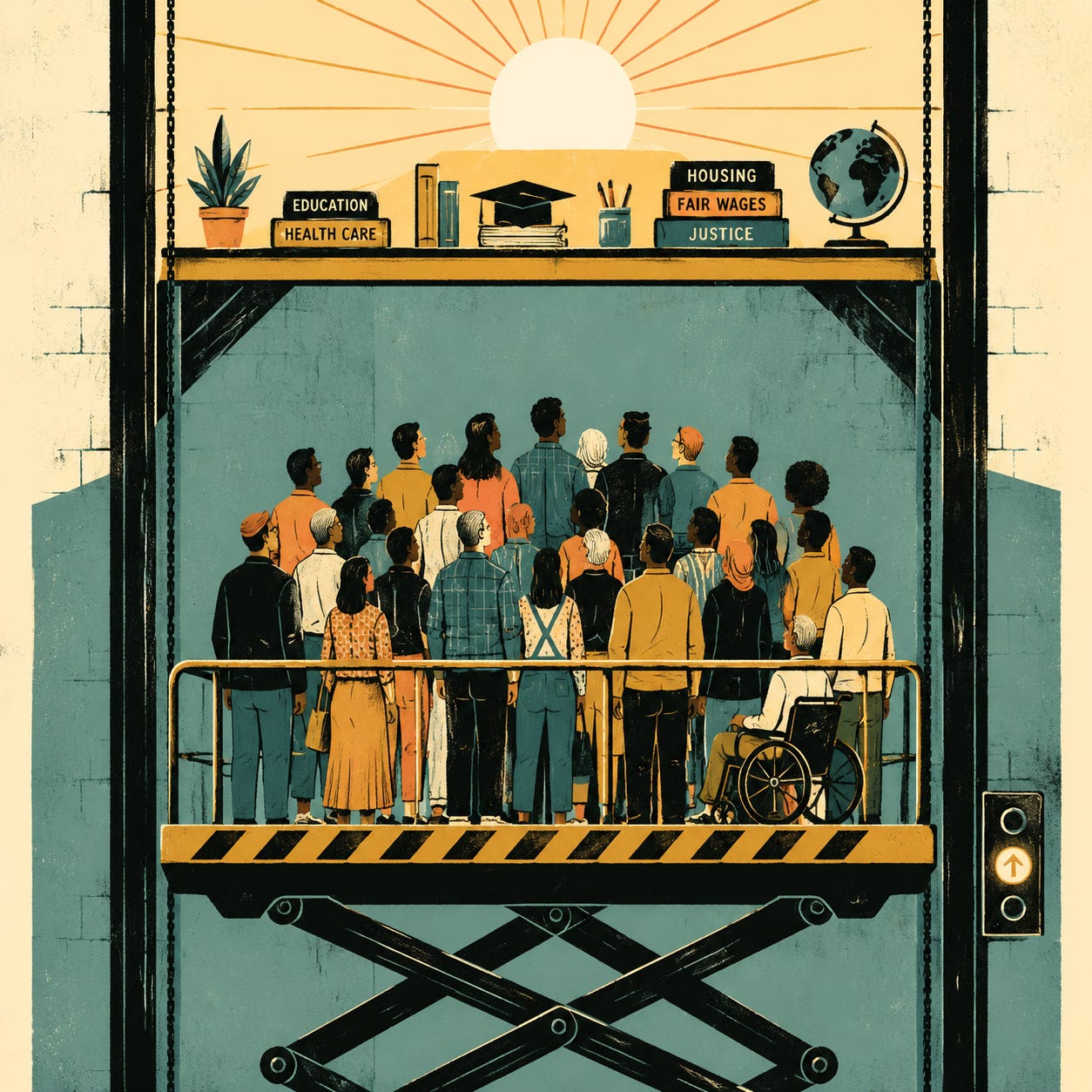
For people to be able to develop their talents, to experiment and take chances, and to pursue ideas, they need to be able to afford it. If they are too busy, spending all their time and energy just surviving, they have no buffer. In a future with AI, in which we seek to maximize our potential for innovation and creativity and creative economic potential, we recognize how deeply underinvested in human capital we are. We seek to remedy that and transform the nation’s great wealth into a society that aims to give as many people as possible a buffer within which they can develop their skills and apply them to great effectiveness. That way, we collectively have the best odds at cultivating the next generation of innovators by adding more bets in our human pool.
After all, VCs do not succeed because they are always correct in detecting the most talented and high-potential winners to invest money in. They win because they are betting on an entire portfolio, and they can afford to lose most of their bets. They just need a few winners to make the whole portfolio pay off.
But on the subject of VCs, usually what they bet on isn’t even the idea or the innovation itself. They bet on the people, the founding team itself. Y Combinator once noted that, after cultivating thousands of startups, what they realized is that intelligence was not the deciding factor in which startups succeeded. After a baseline amount of intelligence, what mattered most was determination - that ability to just keep going and keep trying.
Determination, resilience, taste, judgment (the things that matter the most), none of them belong to a privileged few. They can come from anywhere. But we’ve built a country that struggles to recognize them unless they arrive wrapped in the right school, the right title, or the right amount of starting capital.
Worse, we grind those qualities out of people long before they have a chance to surface: under the pressure of survival, through childhoods spent memorizing answers instead of asking questions, or careers spent projecting certainty instead of developing conviction.
For as long as I can remember, the obvious response, invest in people, give everyone a real floor, treat a human being as worth something before they’ve proven their market value, has been waved away as naive and idealistic. It’s a nice sentiment we can’t afford, because the hard logic of competition says the efficient thing and the humane thing pull in opposite directions, and efficiency wins.
I don’t think that’s true anymore. I think AI changes the equation.
If the scarce resource is no longer information or even technical skill, but human judgment (and judgment grows only when people have the time, safety, and freedom to develop it), then investing broadly in people stops being charity or idealism. It becomes a strategy.
The most economically valuable thing a society can do may be the thing we’ve spent decades dismissing as soft: Give as many people as possible the chance to become someone worth betting on.
For maybe the first time, our reasons to chase wealth and our reasons to build a more humane society point the same direction, not out of virtue, but out of necessity.
And that gives me great hope.
But it doesn’t come without effort. We have a lot of cultural narratives to start asking questions of, assumptions that we have to be able to first identify and then assess with clear judgment. A lot of political willpower is needed during a time in which it feels impossible for us to agree on anything.
Yet if we don’t do this, we stand to face a future in which we are even more fractured than we are today. We would have ceded leadership on the global stage to our competitors when we could have defined the values and standards for success in an AI-driven world where prosperity is shared with everyone.
We would have abandoned our ability to hope and dream of creating a fair and free society in which the governance, structures, and rules aim to protect that which is the most sacred of our individual liberties and rights: Our ability to live and achieve our aspirations, to strive for that which we know we can become, and to be surrounded by others who choose to do the same.
What Now?
I made a pledge that I would never write an article about society and leave you hanging with a sense of despair. I will always provide something that you can do about it. This is that section.
I would encourage you to start with yourself. Ask yourself the things that you believe, whether you truly believe them or they are simply an inheritance from the culture, context, and environment in which you were brought up. What is actually true and what is simply a rule that you’ve learned a long time ago and never asked yourself why?
Have discussions with your friends, neighbors, and family, and stay curious. If you wish to take even more action, I highly encourage you to consider voting in midterm elections in November. All of the House seats are up for election, and about a third of the Senate. We may not be able to force those in power to listen to us in this round, but we can at least give ourselves a starting chance. All it takes is an hour of your time to consider who best represents your interests and to go and vote.
I am building a tool to help you look at your representatives’ voting history and donation history against what you value, so you can ignore all the noise and simply vote based on facts and your priorities.
Will share it soon. Stay tuned.
References
Jack Welch on shareholder value. Francesco Guerrera, “Welch condemns share price focus,” Financial Times, March 12, 2009. Welch, the GE CEO who helped popularize the concept after a 1981 speech, later called shareholder value “the dumbest idea in the world… a result, not a strategy.” Accessible coverage: “Jack Welch Elaborates: Shareholder Value,” Bloomberg, March 16, 2009.
Warren Buffett & Jamie Dimon on short-termism. Warren E. Buffett and Jamie Dimon, “Short-Termism Is Harming the Economy,” The Wall Street Journal, June 6, 2018. Argues that quarterly earnings guidance drives an unhealthy focus on short-term profits at the expense of long-term strategy, growth, and sustainability. (Note: Buffett’s critique targets short-termism and quarterly guidance, not shareholder value as a goal. He is a proponent of building long-term shareholder value.)
Business Roundtable (2019). “Business Roundtable Redefines the Purpose of a Corporation to Promote ‘An Economy That Serves All Americans,’” Business Roundtable, August 19, 2019. 181 CEOs walked back the shareholder-primacy model the group had endorsed since 1997, committing to all stakeholders.
Eric Ries, Incorruptible. Eric Ries, Incorruptible: Why Good Companies Go Bad… and How Great Companies Stay Great (2026). The Lean Startup author argues for “mission primacy” to replace the shareholder-first framework that has dominated corporate governance since the 1980s.
John Cleese on creativity. John Cleese, “Creativity in Management” lecture, Video Arts, 1991. Identifies the conditions for creativity (space, time, confidence, and humor) and the shift from a tense “closed mode” to a relaxed, playful “open mode.” Summary and key passages: The Marginalian.
Psychological safety (Google’s Project Aristotle). Charles Duhigg, “What Google Learned From Its Quest to Build the Perfect Team,” The New York Times Magazine, February 28, 2016. Google’s multiyear study of more than 180 teams found that psychological safety, the shared belief that it is safe to speak up, ask questions, and take risks without fear of embarrassment, mattered more to team effectiveness than anything else. The concept originates in Amy Edmondson’s research at Harvard.
Capital returns vs. wages (r > g). Thomas Piketty, Capital in the Twenty-First Century (Harvard University Press, 2014). The private rate of return on capital (r) tends to exceed the rate of economic growth (g) over long periods, concentrating wealth in asset owners rather than wage earners.
The “yard sale” model of inequality. Bruce M. Boghosian, “Is Inequality Inevitable?” Scientific American, November 2019. Agent-based simulations (building on work by Anirban Chakraborti and proofs by Boghosian and colleagues at Tufts) show wealth concentrating inexorably toward a single “oligarch” even in a fair, 50/50 trading economy.
“Lost Einsteins”. Alexander M. Bell, Raj Chetty, Xavier Jaravel, Neviana Petkova, and John Van Reenen, “Who Becomes an Inventor in America? The Importance of Exposure to Innovation,” Quarterly Journal of Economics134, no. 2 (2019). Children born into the top 1% are about ten times more likely to become inventors than those from the bottom half; exposure and opportunity, not innate talent, drive the gap. Summary: Brookings, “America’s Lost Einsteins”.
VCs bet on a portfolio (the power law). Peter Thiel, Zero to One (Crown Business, 2014); see also “VCs use this ‘power law’ to identify massive winners,” CNBC, July 21, 2025. A small number of winners drive the vast majority of a fund’s returns, so the model depends on a portfolio rather than picking only certain winners.
VCs bet on people; determination over intelligence. Paul Graham, “What We Look for in Founders,” October 2010. “We thought when we started Y Combinator that the most important quality would be intelligence… But as long as you’re over a certain threshold of intelligence, what matters most is determination.” (Y Combinator funded Airbnb because they “liked the founders so much,” despite doubting the idea.)
I largely agree with the essay’s argument about wealth inequality. The yard-sale model is a useful reminder that concentration can emerge even without malice, simply from the dynamics of the system itself.
But I sometimes wonder whether wealth inequality is ultimately the most important problem a civilization faces. Wealth attracts attention because it is visible and easy to quantify. Power is harder to measure, but perhaps more consequential.
The deeper question may not be how wealth is distributed, but how power is distributed, how it flows, and what kinds of power structures a society produces. Wealth can limit opportunity, but power shapes the rules under which opportunities exist in the first place.
Which brings me to the idea of a “nation.” If we think of a nation not merely as a geographic territory but as a power institution, its primary function has rarely been innovation. Historically, states evolved to maintain order, coordinate resources, secure borders, and preserve themselves. Innovation was often a byproduct, not the objective.
Looking across the history of civilization, the most transformative innovations rarely emerged from isolated or closed nations. They emerged from flows — of people, ideas, goods, technologies, and cultures across boundaries. The Renaissance, the Scientific Revolution, the Industrial Revolution, and the modern internet economy were all products of networks that exceeded any single state.
This is why AI leaves me with a slightly different question. Perhaps the goal is not only to build an innovation nation. Perhaps the larger challenge is to build an innovation civilization — one capable of creating the conditions for human creativity, experimentation, and knowledge exchange at a scale larger than any single nation can sustain on its own.
I love your writing Muxin. I've been doing deeper dives into Values with my leadership community, and almost without fail, we keep coming back to the fact that they're dead-center at the heart of thoughts, feelings, actions, beliefs, etc.